
AI can accelerate flood forecasting.
It cannot replace engineering judgment.
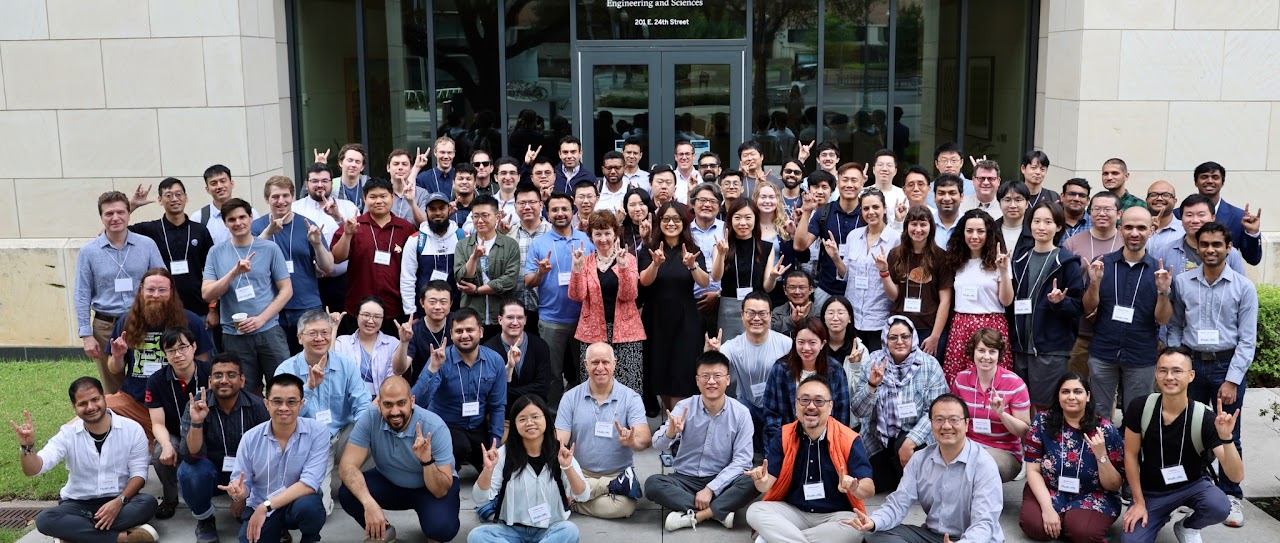
From May 19–21, 2026, HERO E&C CEO Dr. Seoyoung Kim, P.E. attended the HydroML 2026 Symposium at the Oden Institute for Computational Engineering and Sciences at The University of Texas at Austin.
The three-day symposium brought together hydrologists, Earth scientists, advanced modelers, and AI/ML researchers working at the intersection of artificial intelligence, machine learning, water, and Earth sciences.
Three practical observations:
→The strongest direction is not “AI instead of physics.”
It is AI integrated with physical constraints, hydraulic models, scientific knowledge, and real-world observations.
→Flood-forecasting research is advancing rapidly.
Differentiable physics-grid models, physics-guided LSTMs, high-resolution flood emulators, foundation models, and LLM-based decision support were among the approaches presented.
→Research performance is not the same as operational readiness.
Uncertainty quantification, transparent limitations, local validation, and accountable engineering judgment remain essential—especially when public-safety decisions are involved.
Symposium highlights
For HERO E&C, the opportunity is practical:
Use AI and machine learning to improve model efficiency, scenario screening, forecast interpretation, and flood-warning decisions—while keeping sound hydrologic and hydraulic fundamentals at the center.
We are applying insights from HydroML 2026 to our flood-warning, HEC-RAS/HEC-HMS modeling, and flood-risk engineering practice.
Planning a flood-forecasting or warning-system upgrade?
HERO E&C can help determine:
#HydroML #ArtificialIntelligence #MachineLearning #FloodForecasting #WaterResources #FloodRisk #TexasFlood #StormwaterManagement