
This month in 30 seconds
-
$312MTWDB Flood Infrastructure Fund
The largest FIF cycle to date is preparing to open its abridged application window.
Prepare now -
Dec 31SB3 county warning plans
Final county flood-warning plans must be submitted to TWDB by December 31, 2026.
Technical work first -
This fallFEMA FMA preparation
FY2026 closed — assemble elevation, repetitive-loss, and benefit-cost data for the next cycle.
Build the data package
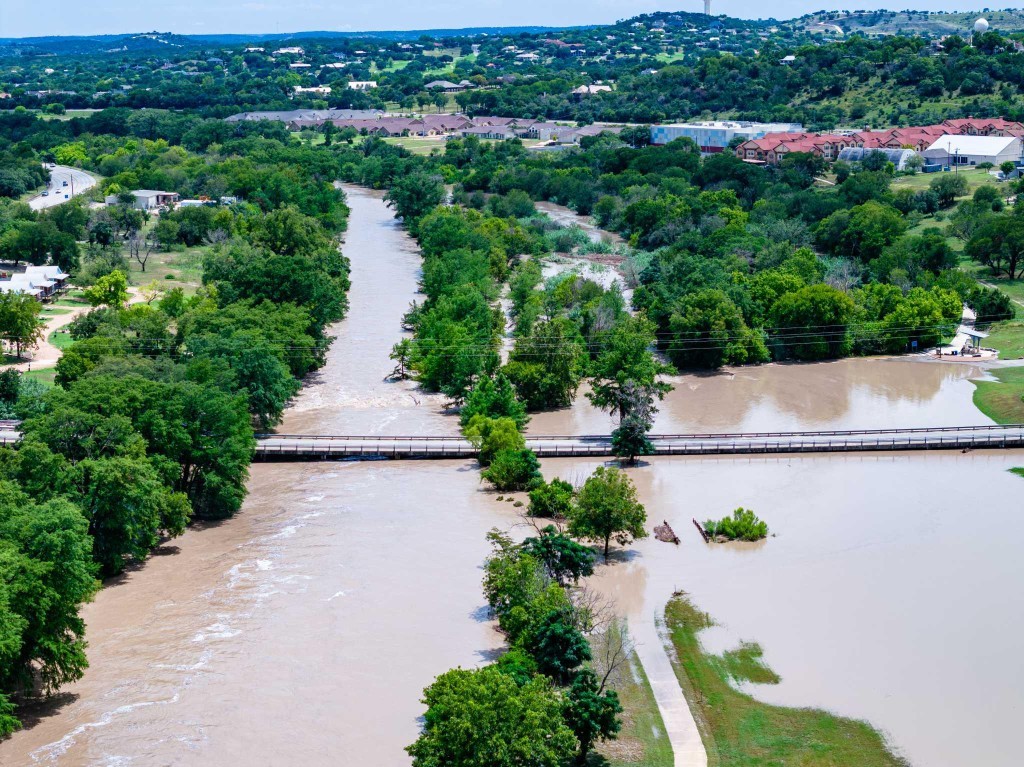
From the Engineer’s Desk. This month marks one year since the Hill Country floods. Across Texas, the response has moved from legislation to implementation. Warning-system funding is reaching eligible counties, and the state’s largest Flood Infrastructure Fund cycle is preparing to open. For most communities, the question is no longer whether assistance exists — it is whether the project, data, and technical basis will be ready before the funding window closes.
Sources: KXAN — One year after the flood
Texas Flood Funding Radar
What is moving now — and how your community should respond.
TWDB Flood Infrastructure Fund
More than $312 million is preparing to move.
What changed
The Texas Water Development Board closed public comment on its 2026–27 Flood Infrastructure Fund plan on June 12. The next major step is publication of the abridged application, which will open a solicitation of more than $312 million — the program’s largest cycle to date. Flood measurement and study projects may qualify for grants of up to 100 percent; mitigation projects up to 85 percent.
Why it matters
A benefit-cost analysis is no longer required during the abridged application stage, reducing one of the largest early costs of pursuing funding. Sponsors are also limited to two abridged applications per category, helping distribute opportunities across more Texas communities.
Confirm that the project appears in the applicable Regional Flood Plan. Subscribe to the TWDB flood-program mailing list, prepare a concise project description, and organize planning, hydrologic, hydraulic, and cost information before the solicitation is released.
SB3 flood-warning system funding
A warning plan must be more than a list of sirens.
What changed
The Texas Legislature allocated $50 million for flood-warning systems across the 30 counties in the July 2025 disaster declaration, with up to $1 million per eligible county for outdoor warning sirens. Twenty-eight of the 30 eligible counties have signed SB3 agreements, and Kerr County became the first to install and test sirens through the program. Counties must submit final plans to TWDB by December 31, 2026.
Why it matters
A defensible system typically requires rain and stream gauges, identification of flash-flood-prone crossings, population and critical-facility exposure, hydrologically supported alert thresholds, and clear notification protocols. The technical basis determines whether warnings can be issued early enough to matter.
- Rainfall + stream data
- Hydrologic threshold
- Decision protocol
- Sirens + alerts
- Public action
A siren is the final output. The engineering system begins upstream.
Counties with signed agreements but incomplete plans should inventory existing gauges and warning assets, identify high-risk crossings and population centers, and establish the engineering basis for alert thresholds now. Six months can be sufficient — but leaves little room for delay.
FEMA Flood Mitigation Assistance
The next application begins before the notice is published.
What changed
The FY2026 Flood Mitigation Assistance cycle provided $600 million nationally. It opened on April 30 and closed for Texas submissions on June 25 through TWDB and FEMA GO. Communities that missed this cycle can still prepare a stronger application for the next round.
Begin assembling elevation certificates, repetitive-loss and severe repetitive-loss property information, property and project cost data, preliminary mitigation alternatives, benefit-cost analysis inputs, and local authorization — the items that usually take the most time.
The next 90 days
| Program | Immediate action | Timing |
|---|---|---|
| TWDB FIF 2026–27 | Confirm Regional Flood Plan eligibility and draft the abridged project description | Application posting expected — TWDB FIF |
| SB3 warning systems | Complete gauge, risk-location, and alert-threshold planning | Final plan due Dec 31, 2026 — TWDB SB3 |
| FEMA FMA | Gather elevation, loss-history, cost, and benefit-cost data | Begin this fall — TWDB FMA |
Sources: TWDB — FIF · Reduce Flooding — $312M cycle · TWDB — SB3 · FOX 4 — Kerr County · TWDB — FMA
H&H Technology
What changed in H&H modeling — and what it means for public projects.
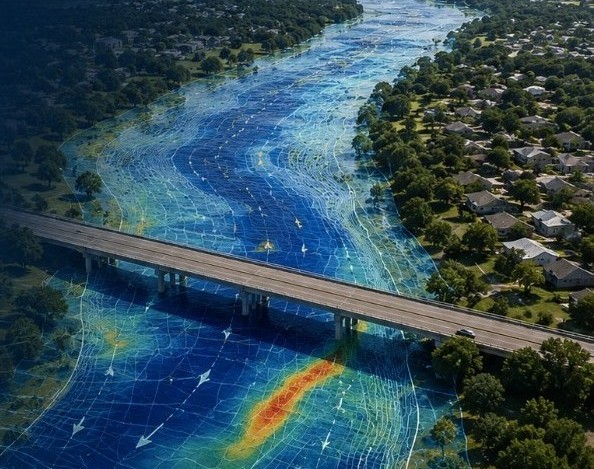
Better model tools can reduce repetitive work without reducing engineering control
HEC-RAS 7.0.1. The U.S. Army Corps of Engineers released HEC-RAS 7.0.1 on June 2. The stability release replaces version 7.0 while maintaining compatibility with earlier projects. For FEMA map revisions and grant-funded studies, the practical issue is version discipline — document the software version used and coordinate with the applicable reviewer before major production work begins.
HEC-HMS 4.14. HEC-HMS 4.14 expands calibration by allowing watershed models to be evaluated against multiple gauges and storm periods, and can retrieve streamflow records directly from the USGS water-data service. Stronger calibration with fewer repetitive data-handling steps matters when a warning-system plan or drainage study must stay within a fixed grant budget.
HERO combines current modeling tools with scripted quality-control checks on model files and results. The purpose is not to remove engineering review — it is to reduce repetitive production effort so more time goes to calibration, alternatives, risk interpretation, and decision support. Every deliverable remains subject to licensed professional-engineer review before issuance.
Sources: HEC-RAS downloads (7.0.1) · HEC-RAS release notes · HEC-HMS software page
Smarter Engineering
Licensed accountability — more engineering from the same project budget.
Automation supports production. It does not replace certification.
Open-source tools such as ras-commander for HEC-RAS and hms-commander for HEC-HMS allow engineers to automate batch simulations, import external data, and perform model-quality reviews that previously required extensive manual processing. Commercial tools are also emerging that convert model outputs into repeatable plots, tables, and report-ready summaries.
For a fixed Flood Infrastructure Fund, SB3, or local project budget, that can mean more storm scenarios, better calibration, more complete alternatives analysis, and clearer maps — rather than more production hours.
- DataTerrain · Rainfall · Flow · GIS
- ModelHEC-RAS · HEC-HMS · Scenarios
- Automated QCFiles · Runs · Tables · Comparisons
- P.E. reviewJudgment · Verification
- DecisionRisk · Alternatives · Funding
Automation accelerates the workflow. The engineer remains accountable.
Every number, map, conclusion, and recommendation is reviewed under the responsibility of the licensed professional engineer of record.
Sources: ras-commander · hms-commander · RASCopilot
Industry Notes
Three developments worth watching.
Cybersecurity
Phishing messages impersonating TWDB have targeted Texas communities. Verify that the sender uses the official twdb.texas.gov domain before acting on a funding notice.
Warning systems
Post–Hill Country discussion has moved toward integrated systems: gauges, hydrologic thresholds, outdoor notification, and clear decision protocols — not sirens alone.
Federal procurement
A government-wide FAR revision is underway. Confirm current clauses and certifications before federal engineering submittals.
Sources: TWDB — cybersecurity alert · TWDB — SB3 · Acquisition.gov — FAR
Get the next issue
One practical Texas water-resources briefing each month — funding deadlines, H&H model developments, smarter engineering workflows, and what they mean for your community.
Monthly only. No general marketing emails.